Why insurers are turning to asset swaps



Why insurers are turning to asset swaps
19 Mar 2026
Asset swaps have been around for decades, but only recently have UK insurers started using them more actively to fine-tune their investment strategies. In a world of tight spreads, intense competition and evolving risks, these tools are proving surprisingly versatile for insurers to enhance yields, improve diversification, while all of the time keeping a close eye on liquidity risks.
At its core, an asset swap is a derivative contract that allows an investor to exchange the cash flows of a security (like a bond) for a different set of cash flows. For example, an insurer can buy a floating rate or inflation-linked bond and then swap its coupon payments for fixed ones. This creates a synthetic fixed rate investment, allowing the insurer to keep the bond’s credit exposure while managing risks associated with the income from the bond to match that of the liabilities.
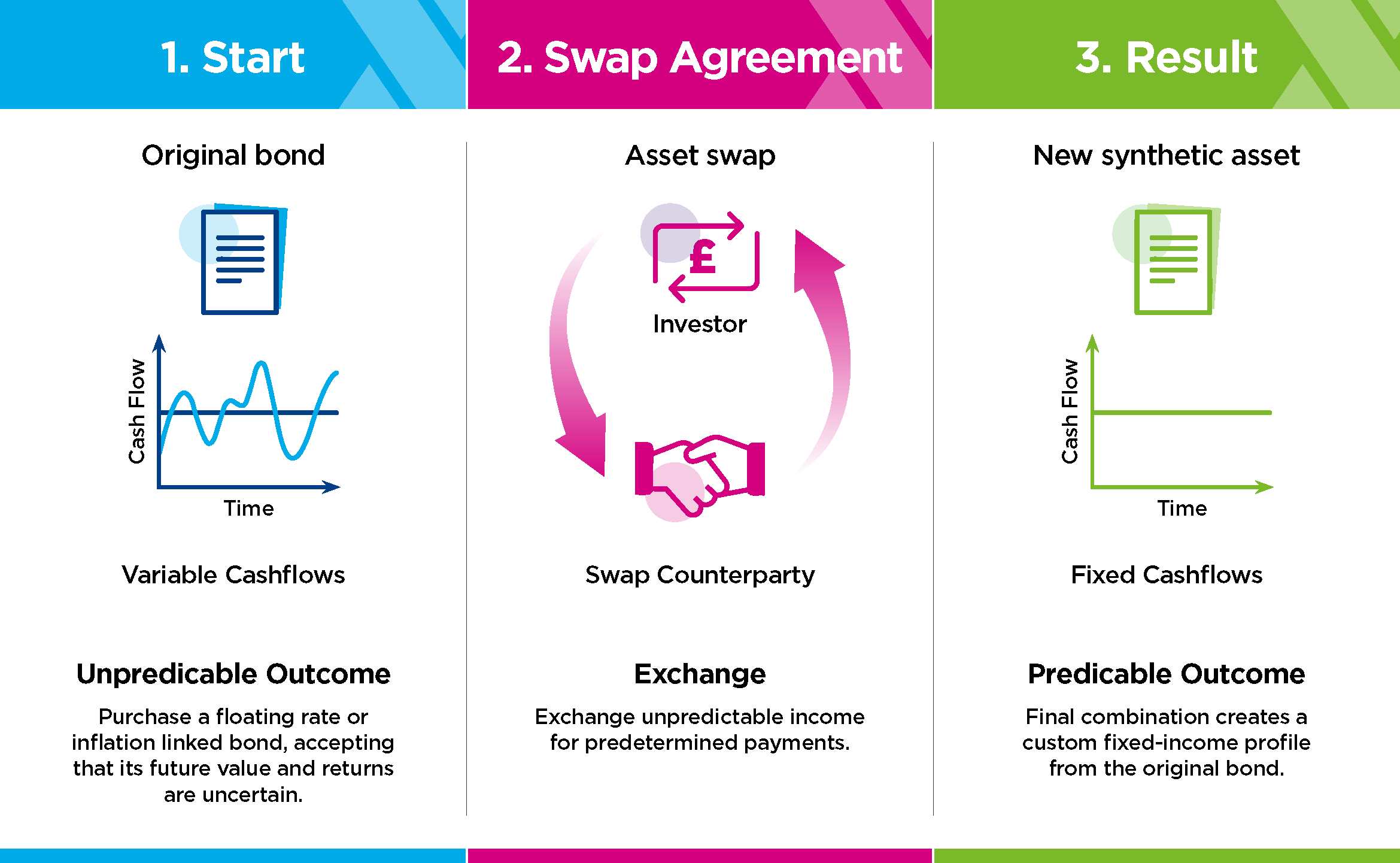
In other words, the asset swap is a well-known derivative instrument (e.g. interest rate swap, inflation swap, cross currency swap) tweaked in two ways:
- Schedule of cashflows reflects the bond payment dates rather than the schedule of the ‘on-the-run’ standard instrument
- Initial and final swap payments are adjusted to reflect cases when bond price and / or bond redemption amount are different than face value (100% of par).
Such adjustments create a common and popular structure (par‑par asset swap), which ensures fair pricing at inception and no upfront cost for the swap.
Insurers are using asset swaps to unlock returns in two valuable ways.
| 1 | Going global: Cross-currency asset swaps let insurers tap into higher-yielding overseas bonds while hedging out currency and interest rate risks. For example, a US dollar bond can be swapped into sterling cash flows, opening up new markets, improving diversification, without FX headaches. |
| 2 | Finding value at home: Insurers also employ asset swaps in domestic markets to isolate relative value opportunities. By ‘swapping out’ an undervalued bond’s coupons, insurers can lock in attractive bond spreads over swaps, engaging into a healthy strategy of ‘buying low and selling high’ later. ‘Cheap’ gilts are increasingly a popular choice with insurers preferring them to expensive corporate bonds with the opportunity to sell gilts later at better valuations and switch back into then cheaper corporate bonds. |
Watch and anticipate liquidity needs
Of course, like with all investment strategies, it’s not all upside. Asset swaps come with trade-off and risks, especially around liquidity. When asset swap value falls, insurer needs to post collateral to the counterparty to cover the unrealised loss on the swap.
These margin calls can strain an insurer’s liquidity if not anticipated and managed. Hence real-time, forward-looking liquidity planning to be able to withstand scenarios of market stress are critical to maximise value from asset swaps especially when the bond is illiquid or private asset.
Used wisely, asset swaps help insurers diversify, boost returns, and better match their assets to long-term liabilities. With the right risk controls in place, they’re a powerful way to stay nimble at a time of intense competition.
Note: details about the PRA liquidity rules here.
Lucian is a management consultant within XPS’s Insurance Consultancy, if you would like to learn more about XPS Insurance Consulting services click here.
Please note the views of the author do not represent the views of XPS Group as a whole.
Contact us

Lucian Rautu
Management Consultant
Related links


- Register for events
- Join our mailing list
Register for events
We enjoy hosting a wide range of events for pension scheme trustees, corporate sponsors, independent trustees, and pensions professionals.
Join our mailing list
Keep up to date with our latest news and views including pension briefings, XPS insights, reports and event invitations.